
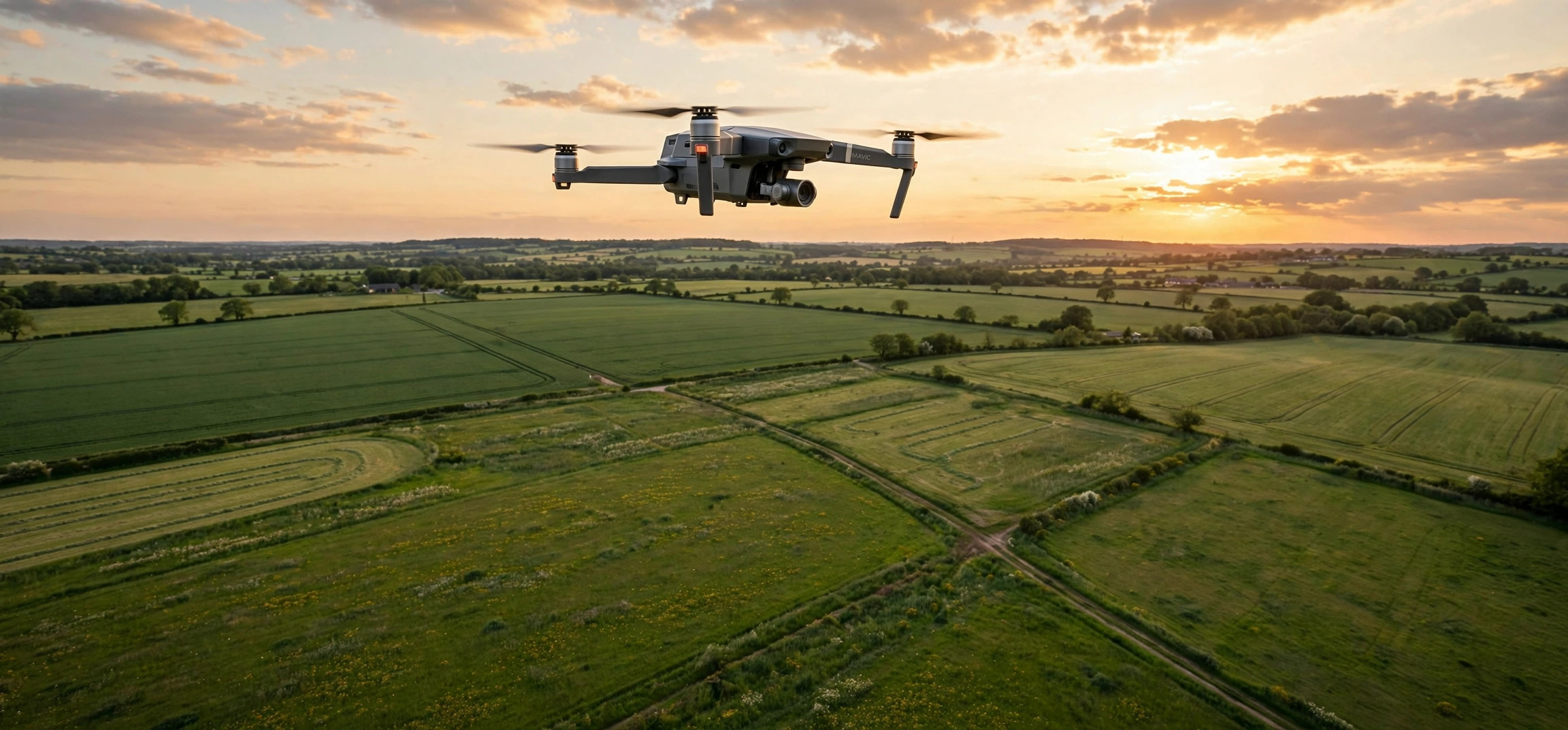
Figuring out how to choose a drone for beginners can feel overwhelming: hundreds of models, confusing specs, and rules that change by country. But buying your first drone is actually straightforward once you know the 9 things that matter. This 2026 guide cuts through the marketing — drone classes, camera specs, battery life, regulations, and budget picks — so you buy the right drone the first time.
How to Choose a Drone for Beginners: The 9 Tips
1. Start With Your Purpose
The first rule of how to choose a drone for beginners is to match the drone to the mission. Aerial photography needs a stabilized camera and good wind resistance; racing needs speed and agility; casual fun needs durability and simplicity. Beginners who buy a pro camera drone “to grow into” usually crash an expensive machine within weeks. Start with what you will actually do in the first 3 months.
2. Understand Drone Classes and Weight
In most countries, drones under 250 g face far fewer restrictions — often no registration, and more places you can legally fly. Sub-250 g drones (like the DJI Mini series) are the default beginner recommendation for exactly this reason. Heavier drones (250 g–25 kg) typically require registration, and sometimes an online competency test. Check your national aviation authority’s current rules before buying, because the weight class determines how much hassle ownership involves.
3. Camera Specs That Actually Matter
Do not shop by megapixels alone. Anyone learning how to choose a drone for beginners should weigh these camera specs above the megapixel count: gimbal stabilization (a 3-axis mechanical gimbal beats electronic stabilization by miles — non-negotiable for smooth video), sensor size (a larger 1/1.3-inch sensor outperforms a higher-megapixel tiny sensor, especially at dusk), video resolution and frame rate (4K/30fps is plenty; 4K/60fps is nice for slow motion), and transmission range (look for OcuSync-style digital transmission, not analog). A 12 MP camera with a 3-axis gimbal will embarrass a 48 MP camera without one.
4. Battery Life and Flight Time
Advertised flight times are measured hovering in still air — expect 70–80 percent in real use. For beginners, 25+ minutes of real flight time per battery is the comfort zone; anything under 20 minutes feels constantly interrupted. Budget for at least one spare battery (two is better) and a multi-battery charging hub. Cold weather can cut lithium battery performance by 20–30 percent, so keep spares warm in a pocket on winter flying days. Pro tip: batteries are the most expensive consumable, so check spare-battery prices before choosing a brand.
5. Obstacle Avoidance and Beginner Modes
Beginners crash — it is a statistical certainty. Omnidirectional obstacle sensing (forward, backward, upward, downward) has saved countless first flights, and is now available even on mid-range models. Also look for GPS-based return-to-home (the drone flies itself back when the battery runs low or signal drops), one-button takeoff/landing, and a dedicated beginner mode that limits speed and altitude while you learn.
6. Know the Regulations Before You Buy
This tip on how to choose a drone for beginners is the one most buyers skip — and the one that causes the most regret. Typical 2026 rules worldwide: register drones above 250 g, never fly above 120 m (400 ft), keep visual line of sight, stay away from airports (usually 5–8 km), and do not fly over crowds. Many countries now require Remote ID (a digital license plate broadcast). Fines for violations are steep. Read your aviation authority’s drone page — it takes 20 minutes and saves you from a very expensive mistake.
7. Set a Realistic Budget (and Include Extras)
The drone’s price is only the start. Budget an extra 30–50 percent for spare batteries, a carrying case, propellers, and possibly ND filters for video. As a rough 2026 guide: $300–$500 buys an excellent sub-250 g beginner drone; $700–$1,200 gets serious camera quality and obstacle avoidance; above that you are paying for professional features beginners will not use. Do not buy the cheapest no-name drone on a marketplace — proprietary parts and zero support make them disposable.
8. Consider Wind Resistance and Durability
Check the wind resistance rating (Level 5 handles ~10 m/s winds — enough for most coastal and open-field flying). Beginners should also favor drones with readily available replacement arms and propellers, and a manufacturer with actual customer support rather than a marketplace listing with no service network. Foldable designs protect the gimbal during transport, which is where many beginner drones get damaged.
9. Try Before You Buy (or Buy Used Smart)
If a friend owns a drone, ask for a supervised flight — 10 minutes of stick time teaches more than 10 hours of reviews. Alternatively, many beginners start with a $50–$100 toy drone to learn orientation and controls risk-free, then upgrade. If buying used, check flight logs for crash history, inspect the gimbal for smooth movement, and verify battery cycle counts in the app.
Drone Accessories Worth Buying From Day One
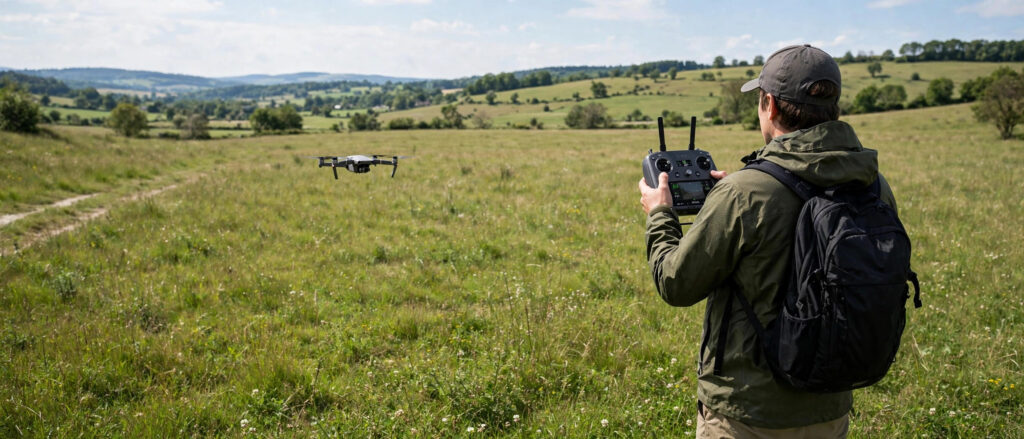
Once you know how to choose a drone for beginners, the right accessories prevent the two biggest beginner frustrations: dead batteries and lost drones. Must-haves: at least one spare battery, a multi-charger, and a set of ND filters (they are sunglasses for your camera — essential for smooth cinematic video in bright sun). Strongly recommended: a hard-shell carrying case (gimbal damage during transport is the #1 beginner repair), propeller guards for indoor or close-quarters practice, and a landing pad (keeps dust and grass out of the motors on takeoff). Skip for now: range extenders, FPV goggles, and cinema-grade filters — buy those after your first 50 flights, when you will actually know what you need.
How to Choose a Drone for Beginners: 2026 Buying Shortlist
Rather than naming models that age fast, here is how to shortlist: filter for sub-250 g, 3-axis gimbal, 25+ minute real flight time, and obstacle sensing in at least two directions. In 2026, that filter leaves you with a handful of proven options from the major brands, all in the $300–$600 band. Read three detailed reviews of your shortlist, watch real (unsponsored) flight footage, and check spare-part prices — then buy. Avoid “4K” drones under $150 from unknown brands: they universally lack true gimbal stabilization, which is the one feature that separates watchable footage from shaky mush.
Making the Most of Your Drone Footage
Once you are flying, your footage deserves good presentation. Drone videos pair beautifully with narration — our guide to free AI voiceover tools for YouTube shows how creators add professional voiceovers to aerial footage. For thumbnails and social posts, free AI background remover tools make quick work of polishing your best stills.
Frequently Asked Questions
What is the best drone for a complete beginner?
A sub-250 g drone with a 3-axis gimbal, GPS return-to-home, and beginner mode — typically $300–$500 in 2026. It keeps regulation hassle minimal, survives learning mistakes better, and still shoots genuinely good 4K video you will be proud to share.
Do I need a license to fly a drone?
It depends on weight and country. Sub-250 g recreational drones usually need no license in most countries, though registration is increasingly required even for small drones. Heavier drones generally need registration plus a basic competency certificate. Always verify with your national aviation authority.
How far and high can a beginner drone fly?
Legally: max 120 m altitude and within visual line of sight in most countries, regardless of what the hardware can do. Technically, modern beginner drones transmit video 5–10 km — but flying that far as a beginner is illegal in most places and a reliable way to lose the drone.
Can I fly a drone in the rain or wind?
No rain — consumer drones are not waterproof, and wet electronics fail fast. Wind: respect the drone’s rated wind resistance (Level 5 ≈ 10 m/s) and fly well below it while learning. Gusty days are the top cause of beginner flyaways.
How do I avoid crashing my first drone?
Learn in a wide open field with no people, start in beginner mode, keep the drone facing away from you until orientation clicks, never fly with a low battery, and let GPS return-to-home do its job instead of panicking. Most crashes come from overconfidence in week two, not incompetence in hour one.
Are cheap toy drones worth it for practice?
Yes, with the right expectations. A $50–$100 toy drone teaches orientation, throttle control, and spatial awareness without risking a $400 camera drone. Just know that toy drones lack GPS and stabilization, so they are actually harder to fly — when you graduate to a real beginner drone, it will feel easy by comparison.
Conclusion
Knowing how to choose a drone for beginners comes down to nine decisions: define your purpose, stay under 250 g if possible, demand a 3-axis gimbal, insist on 25+ minutes of real flight time, get obstacle avoidance, learn your local regulations, budget for extras, check wind resistance, and get stick time before committing. Follow this guide and your first drone will be a joy instead of an expensive lesson. Buy once, buy right — then get out to that open field and happy flying.