
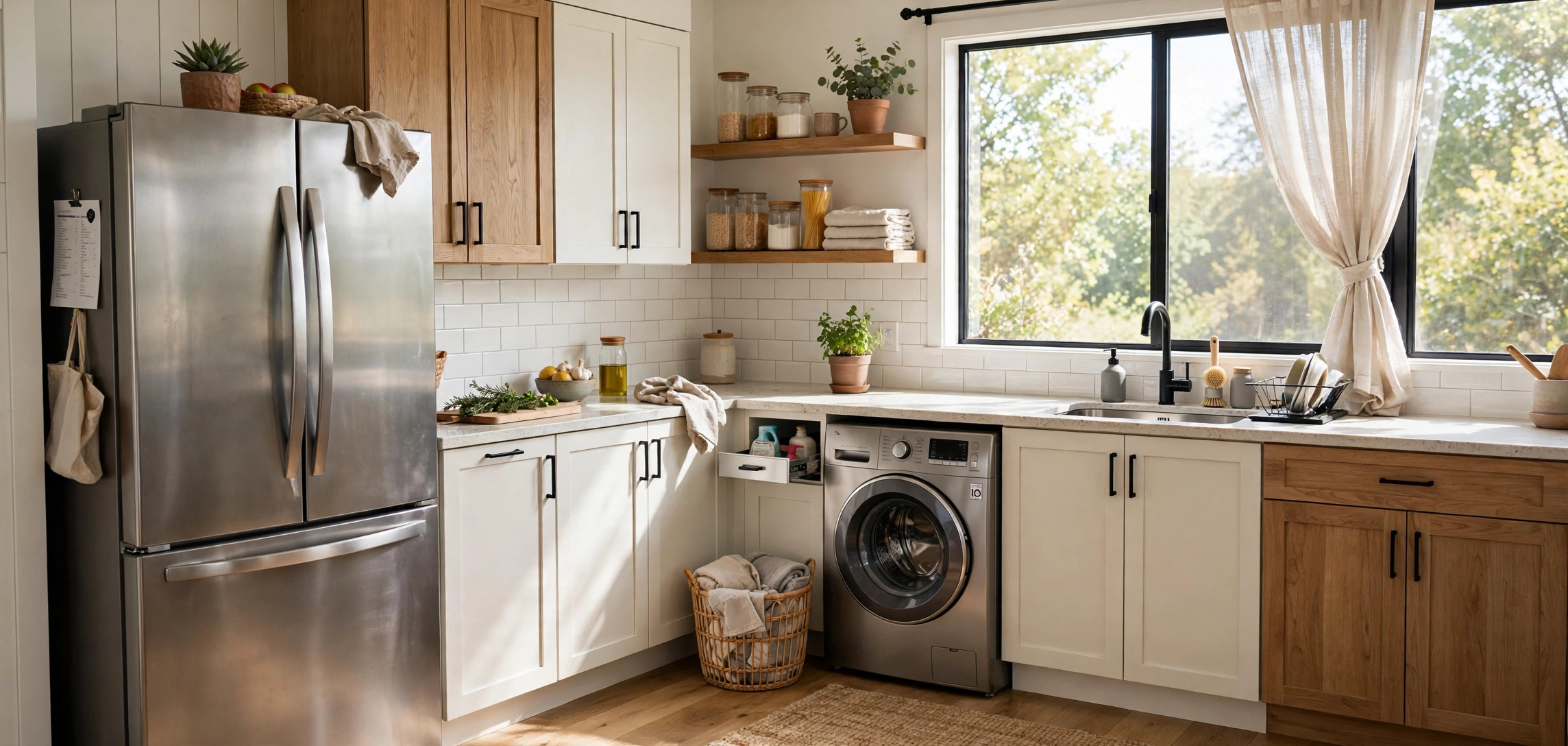
Learning how to make home appliances last longer is one of the smartest ways to save money in 2026. The average refrigerator costs over $1,200, a washing machine around $800, and an air conditioner well above $1,000 — replacing any of them years earlier than necessary is painful. The good news is that most appliances fail early not because of bad luck, but because of neglected maintenance. With the right habits, you can add 3 to 7 years to the useful life of almost every appliance in your home.
Why Appliances Die Early (and How to Make Home Appliances Last Longer)
Before diving into the tips, it helps to understand what actually kills appliances. In most cases, it is not a single catastrophic failure. It is a slow accumulation of small problems: dust choking airflow, mineral scale building up on heating elements, filters never being cleaned, and moving parts running dry. Each of these is cheap and easy to fix — if you catch it in time. That is the core principle behind how to make home appliances last longer: prevent the small problems, and the big ones never arrive.
Planned Obsolescence: What Manufacturers Do Not Tell You
You have probably heard the term “planned obsolescence” — the idea that products are deliberately designed to fail so you buy replacements. The reality in 2026 is more nuanced. Most reputable brands do not install self-destruct timers, but they do make design choices that shorten lifespans: sealed drums that cannot be serviced, proprietary parts that cost nearly as much as a new unit, and software-locked features. The European Union’s right-to-repair rules, now in force, are pushing back by requiring spare parts availability for up to 10 years on many appliance categories.
What does this mean for you? Buy from brands with strong parts availability and service networks, keep your proof of purchase, and favor models with mechanical simplicity over gimmicky smart features you will never use. A repairable appliance is an appliance that can live twice as long — and repairable design is central to how to make home appliances last longer in the right-to-repair era.
The 80/20 Rule of Appliance Maintenance
Roughly 80 percent of lifespan extension comes from 20 percent of maintenance tasks: cleaning filters, clearing vents and coils, descaling water-contact parts, and not overloading the machine. If you do only these four things consistently, you are already ahead of most households. The 12 tips below build on this foundation, organized by appliance type.
12 Proven Tips: How to Make Home Appliances Last Longer
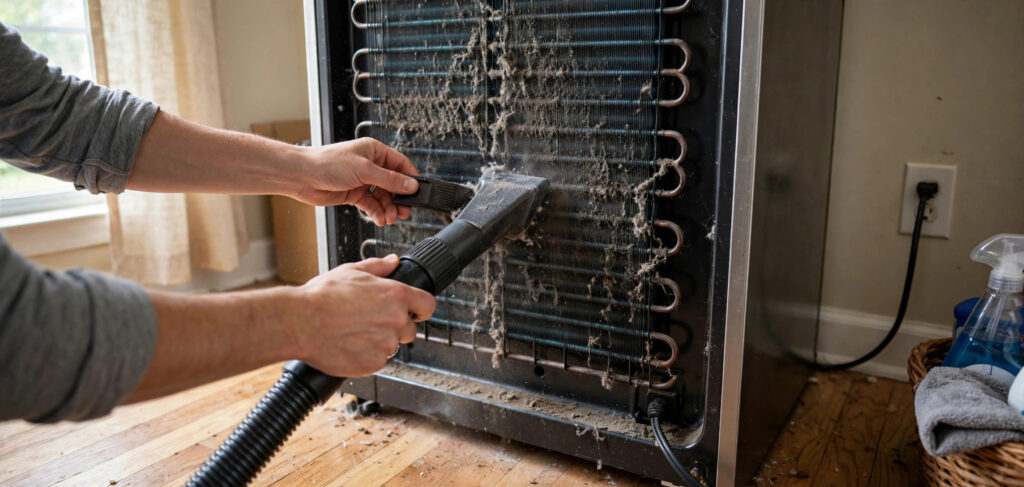
1. Clean Refrigerator Coils Every 6 Months
Dust-covered condenser coils force your fridge’s compressor to work harder and run hotter, which is the number one cause of premature compressor death. Unplug the fridge, pull it away from the wall, and vacuum the coils (usually at the back or underneath behind a grille) with a brush attachment. This 15-minute job can add years to a refrigerator’s life and cut its energy use by up to 15 percent.
2. Replace or Clean Fridge Water Filters on Schedule
A clogged water filter strains the inlet valve and can cause slow ice production or leaks. Follow the manufacturer’s schedule — typically every 6 months — and use genuine or certified compatible filters. While you are at it, check the door gaskets: close the door on a dollar bill, and if it slides out easily, the seal is weak and letting cold air escape.
3. Never Overload Your Washing Machine
Overloading is the fastest way to kill a washer. It strains the motor, wears out the drum bearings, and damages the suspension. As a rule, fill the drum no more than three-quarters full, and leave a hand’s width of space at the top for front-loaders. Distribute heavy items evenly to prevent the violent shaking that destroys bearings.
4. Run a Monthly Hot Maintenance Wash
Modern cold-water detergents are great for clothes but terrible for machines: they leave residue that breeds mold and odor in front-loaders. Once a month, run the machine empty on the hottest cycle with a cup of white vinegar or a washing-machine cleaner. Leave the door and detergent drawer open after every wash so the drum dries out.
5. Descale Appliances in Hard-Water Areas
Limescale is the silent killer of kettles, coffee machines, dishwashers, and washing machines. If your area has hard water, descale every 1 to 3 months with citric acid or white vinegar. For dishwashers, also clean the filter at the bottom of the tub monthly — trapped food particles recirculate and redeposit on dishes while straining the pump.
6. Clean Microwave Interiors and Vents Weekly
Food splatter inside a microwave eventually damages the interior coating and the waveguide cover (the small mica panel on the side wall). Wipe the interior weekly with a damp cloth, and never run the microwave empty — it can destroy the magnetron in seconds. Keep the exterior vents dust-free so the electronics stay cool.
7. Service Your Air Conditioner Before Summer
An AC that has not been serviced will cool poorly, consume far more electricity, and wear out its compressor years early. Every spring, clean or replace the filters, hose down the outdoor condenser coils, clear debris from around the outdoor unit, and check that the condensate drain is not blocked. If cooling feels weak despite clean filters, call a technician for a refrigerant check before the compressor suffers.
8. Give Every Appliance Room to Breathe
Appliances generate heat, and trapped heat shortens electronic lifespans dramatically. Keep at least 5 to 10 cm of clearance around refrigerators, microwaves, and TVs. Never push the dryer or washing machine flush against the wall — crushed hoses and blocked vents are common causes of failure. For built-in ovens and dishwashers, make sure the ventilation gaps specified in the manual are respected.
9. Use Surge Protectors on Expensive Electronics
Power surges from lightning or grid fluctuations can fry control boards in an instant — and control boards are often the most expensive part to replace. Put refrigerators, washing machines, TVs, and air conditioners (via their isolator switch) behind quality surge protectors. In areas with frequent brownouts, a voltage stabilizer for the refrigerator and AC is cheap insurance.
10. Follow the Manual’s Load and Usage Limits
It sounds obvious, but most people never read the manual. Dishwashers have maximum load ratings, ovens have preheating instructions that protect the elements, and dryers have lint-filter warnings for a reason — lint buildup is both a fire hazard and a machine killer. Spending 20 minutes with each manual when you buy an appliance pays for itself many times over.
11. Fix Small Problems Immediately
A dishwasher that does not drain fully, a fridge that cycles too often, a washer that walks across the floor — these are early warnings. Small problems are cheap to fix; ignored problems cascade. A $15 door seal replaced today prevents a $400 compressor repair next year. That is how to make home appliances last longer in practice: small fixes, done early. If you are handy, manufacturer service manuals and parts diagrams are widely available online; if not, a single service visit at the first sign of trouble is money well spent.
12. Consider Smart Monitoring for Early Warnings
Smart plugs with energy monitoring can alert you when an appliance’s power draw changes — a fridge drawing steadily more power often has dirty coils or a failing seal. If you enjoy DIY projects, you can build your own monitoring setup; see our guide on DIY home automation with Raspberry Pi for ideas. Smart appliances also communicate over your home network — our plain-English explainer on what an API is shows how these devices talk to their apps behind the scenes.
Maintenance Schedule: How to Make Home Appliances Last Longer Year After Year
Consistency beats intensity. Here is a simple calendar that puts how to make home appliances last longer on autopilot — stick it on the fridge:
| Frequency | Tasks |
|---|---|
| Weekly | Wipe microwave interior; clean dryer lint filter after every load |
| Monthly | Hot maintenance wash for the washer; clean dishwasher filter; descale kettle/coffee machine |
| Every 6 months | Vacuum refrigerator coils; replace fridge water filter; clean AC filters in cooling season |
| Yearly | Professional AC service; check washer hoses for bulges; test door seals; inspect dryer vent duct |
Frequently Asked Questions
How long should home appliances last?
With proper care, expect 12–15 years from a refrigerator, 10–12 years from a washing machine, 10–15 years from a dishwasher, 12–15 years from an air conditioner, and 8–10 years from a microwave. Neglect typically cuts these figures by a third or more.
Is it worth repairing an old appliance or should I buy new?
Use the 50 percent rule: if the repair costs more than half the price of a comparable new appliance, and the unit is past two-thirds of its expected lifespan, replace it. Otherwise, repair — especially for simple part failures like seals, belts, filters, and heating elements.
Do extended warranties help appliances last longer?
Extended warranties do not make appliances last longer; they only cover repair costs. The maintenance habits in this guide do far more for actual lifespan. Put the warranty money toward a surge protector and a yearly service visit instead.
Does using eco modes shorten appliance life?
No — eco modes generally extend life by reducing thermal and mechanical stress. The one exception is dishwashers and washers run exclusively on cold eco cycles, which can allow residue buildup; balance them with the monthly hot maintenance wash described in tip 4.
How do I know if my appliance is dying?
Warning signs include unusual noises (grinding, squealing), rising energy bills with no change in usage, longer cycle times, poor performance (fridge not cold enough, clothes still dirty), visible rust or leaks, and frequent tripped breakers. Act on the first sign, not the fifth.
Conclusion
Knowing how to make home appliances last longer is less about expensive products and more about consistent small habits: clean the coils, change the filters, descale regularly, do not overload, and fix small problems fast. These 12 tips cost almost nothing to follow, yet they can easily add years to every major appliance you own — saving you thousands over a decade while keeping perfectly good machines out of landfills. Pick three tips from this list and start this weekend; your appliances (and your wallet) will thank you.